
Use the icon as provided. Do not modify, recolor, or add effects. Always display on a dark or neutral background.
Download icon (PNG)Last updated July 2026
Relief is a 42-day audio program that retrains chronic pain. One-time purchase, no subscription, no tracking, no accounts. Built on peer-reviewed pain neuroscience research. Available now on iPhone.
Use the icon as provided. Do not modify, recolor, or add effects. Always display on a dark or neutral background.
Download icon (PNG)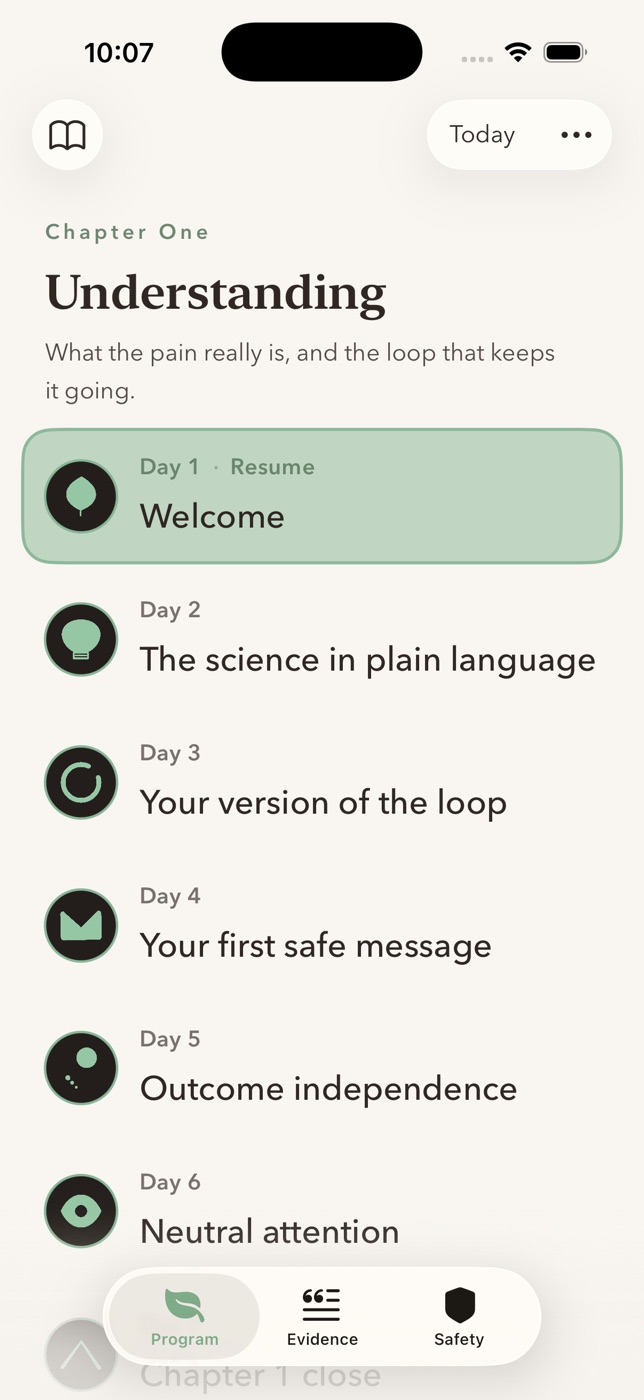

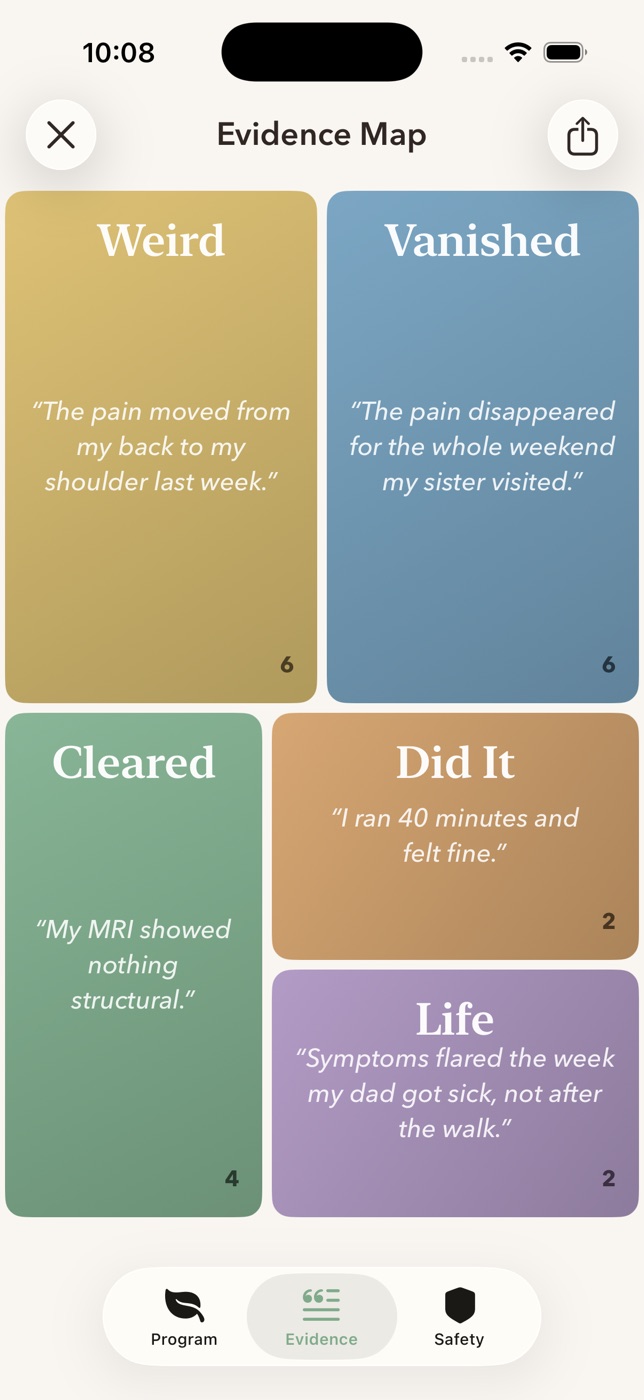
High-resolution screenshots and additional screens available on request.
One-liner: A 42-day audio program that retrains chronic pain.
What it is: A structured program, listen or read, covering pain neuroscience education, sensation tracking, graded exposure, safety behavior withdrawal, and evidence collection. 42 sessions across 6 chapters with a beginning, middle, and end.
Who it's for: People with medically-cleared chronic pain who have tried conventional approaches and want a structured, self-guided retraining program.
Platform: iPhone. Available now on the App Store.
Price: One-time purchase. No subscription, no auto-renewal, no coaching upsell, no premium tier. The first session is free. Full refund available through the App Store.
Philosophy: Outcome-independent. No pain ratings, no symptom journals, no streaks, no badges, no gamification. The program builds safety and collects evidence that the pain signal is not a threat. Designed to be finished and deleted.
Research basis: Built on peer-reviewed pain neuroscience research from the University of Colorado, Stanford, the University of South Australia, and others. See the research section below for full citations.
Privacy: No accounts. No email required. No analytics. No tracking. Works offline. All data stays on device. Relief does not know who its users are.
Boilerplate: Relief is a 42-day audio program that retrains chronic pain using techniques from peer-reviewed pain neuroscience research: pain reprocessing therapy, pain neuroscience education, and graded exposure. The program is a one-time purchase with no subscription, contains 76 audio recordings across 42 daily sessions, and is designed to be completed and deleted. Relief collects no user data, requires no account, and works entirely offline. It is available on iPhone from Escape Velocity Studio Ltd.
Pain journals, symptom logs, daily ratings: the entire pain app category asks users to pay attention to their pain. Modern pain neuroscience says this trains the brain to keep the alarm on. Relief never asks for a pain rating. Attention goes toward safety, not threat.
42 sessions. A beginning, a middle, and an end. No content library, no engagement loops, no streaks. When you finish, you delete the app. That is the intended outcome. A subscription pain app has no incentive for you to get better. Relief does.
The leading pain retraining apps bill you every year and auto-renew. Some pile on coaching upsells that cost far more than the app itself. Every month a user stays in pain is another month of revenue. Relief is a one-time purchase. We do not make more money when you stay in pain longer.
Pain reprocessing therapy, pain neuroscience education, and graded exposure are established clinical techniques with published trial data. Relief puts them into 5 to 10 minute sessions, listen or read, you can do alone, at home. No decisions, no browsing, press play.

Tim de Jardine is a founder, product leader and fitness enthusiast with 20 years' experience building apps used by millions, from Booking.com to top-ranked fitness and fintech products. Relief is his solo project: no team, no investors, no VC funding. He designed, built, and shipped the entire app alone. It exists because he wanted a pain retraining program that worked the way recovery actually works: structured, finite, and designed to end.
For interviews or quotes: [email protected]
For review builds, interviews, or additional assets:
[email protected]